
Bangladesh Government moved to reduce elephant-human conflict by Mongabay report

Around 270 Asian elephants live in Bangladesh, where the species is considered critically endangered. Conflict between people and elephants has long posed threats to both human communities and elephant populations, but in northeastern Bangladesh, this conflict has become more acute. This region is home to “non-resident” elephants, individuals that historically migrated from neighboring India, but with the construction of border fences, these elephants have become trapped, forcing them to roam croplands and settlements in search of food, often with fatal consequences.

A March 2025 Mongabay report brought national attention to this unfolding crisis. The article revealed that unplanned infrastructure and border fencing were pushing elephants into direct conflict with local communities, and also highlighted the ecological and political complexities surrounding the transboundary movement of elephants, which had been disrupted.
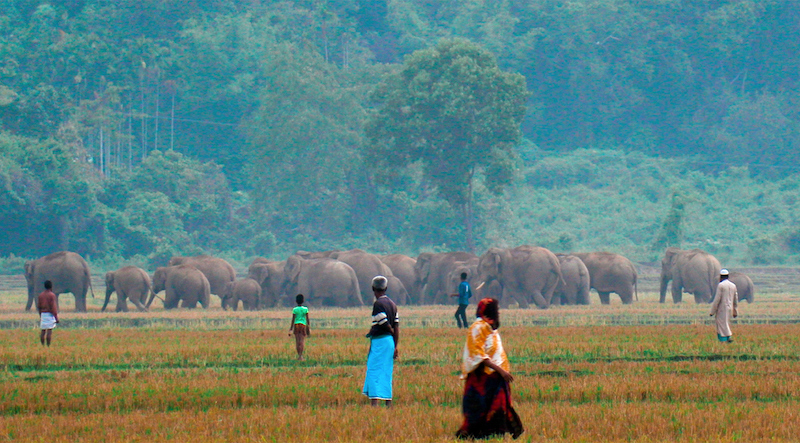
In the northeast, elephant herds usually come down to Bangladesh from the hills of neighboring India’s Meghalaya state during the rice harvesting season between December and May in search of food before returning to their home range. Image by Mohammed Mostafa Feeroz.

Experts interviewed in the report urged the government to implement solutions, including engaging local communities in elephant conservation, expanding Elephant Response Teams, and activating a bilateral protocol with India signed in 2020 to manage transboundary elephant movement.

Impact

Three months after Mongabay’s report was published, the Ministry of Environment, Forests, and Climate Change (MoEFCC) announced plans to designate the affected zone as a protected area. In May 2025, a team of Bangladeshi government officials and experts visited the region to assess the situation, including Syeda Rizwana Hasan, an advisor to the ministry who confirmed the decision to move forward with protective status for the region.

“I personally visited the area on May 26 to understand the gravity of the situation,” she told Mongabay. “Initially, we are working on declaring the area as protected and finding ways to reduce conflicts and damages. At the same time, we will continue to talk to India to find a sustainable solution.”

This move was welcomed by conservationists as an important first step. However, they also noted the difficulty of managing a protected area in a densely populated region with active croplands. “The region is almost full of human settlement and croplands,” said one zoology professor in the original report. “It will be a challenge to maintain the protected status.”

Experts continue to call for the opening of traditional elephant corridors across the Bangladesh-India border, which would allow elephants to resume their natural migration patterns and reduce pressure on both wildlife and local communities. 

While challenges remain, the government’s response underscores the role of independent journalism in surfacing urgent conservation issues and prompting timely action in the context of human-wildlife interactions.

Support independent environmental journalism

If you are interested in helping shed light on conservation issues such as this, there are two excellent ways you can do so with Mongabay. First, consider making a donation, which directly helps us continue to produce high-impact journalism from nature’s frontline. Second, subscribe to Mongabay’s newsletter to get the latest environmental news delivered right to your inbox, and share whatever articles move you with friends and family.

About Mongabay

Mongabay is a nonprofit environmental science and conservation news platform focused on providing original, reliable, and independent journalism from nature’s frontline. We pride ourselves on producing reporting that has substantial and tangible impacts around the world.

Banner image: A female elephant with her calf on agricultural land. Image by Mohammed Mostafa Feeroz.