
Investigating illegal land grabs by Mennonites helps return rights and territory to Indigenous communities in Colombia

In August 2023, Mongabay Latam published a joint investigation with the Colombian independent media outlet, Rutas del Conflicto, on illegal land acquisitions and deforestation in Colombia’s Llanos Orientales. The reporting revealed how Mennonite communities that arrived in the Meta department in 2014 had expanded rapidly, acquiring close to 38,000 hectares (almost 94,000 acres) of land in Puerto Gaitán for their colonies called Australia, Liviney, and Las Piedras. 

Much of this land overlaps with the ancestral Sikuani Indigenous communities of Barrulia, Iwitsulibu, and Tsabilonia – which later became a dangerous territory, hotly contested by drug traffickers and paramilitaries – from the 1980s to the early 2000s, when Mennonite people began arriving. By late 2022, the reporting team began looking into why the Attorney General’s Office was investigating at least 10 men from these religious communities for environmental crimes and other proceedings before Cormacarena, the region’s environmental authority.

Impact

Less than a month after publication, the reporting team’s investigation had already made its way into Colombia’s political sphere, when a debate in the Congress addressed the illegal occupation of Indigenous Sikuani territory by Mennonite colonies. Senator Wilson Arias presented evidence to representatives from the Ministry of Agriculture, the National Land Agency (ANT), and the Superintendence of Notaries and Registry, largely drawn from the reporters’ findings.
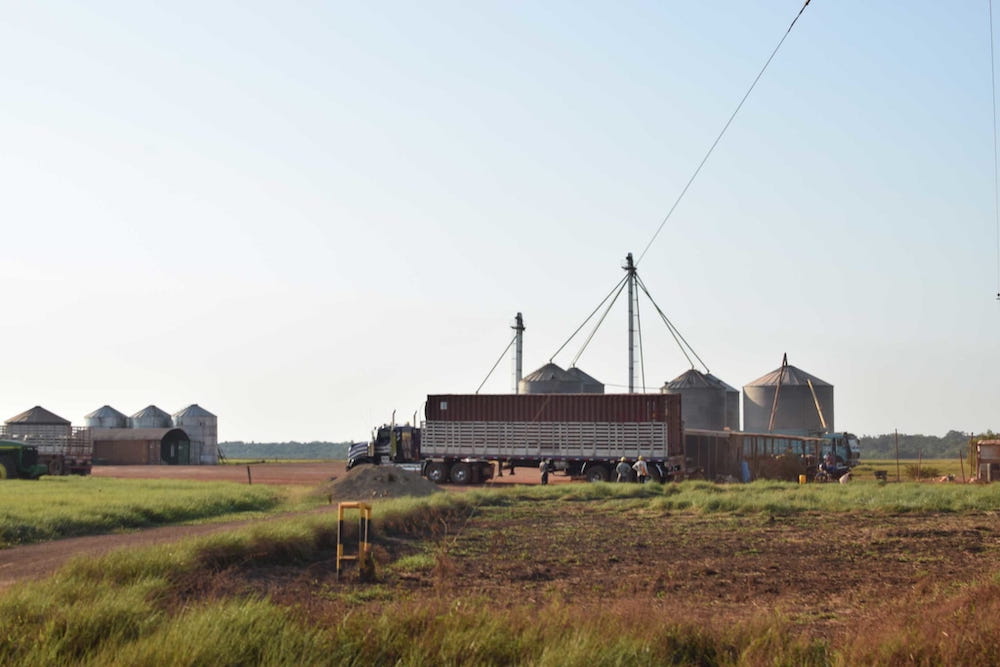
Farm infrastructure built by the Mennonite colonies named Liviney and Australia. Photo by Ana María Guzmán.

During the session, ANT director Gerardo Vega confirmed that Mennonites had illegally acquired these lands belonging to the Sikuani people, and announced that his agency had already requested their return to the ANT on Sept. 22, 2023, with the aim of then returning the territories to the Indigenous community. Return of some of the disputed lands to the Sikuani had already begun when the Mennonite communities mounted a legal challenge to the decision, halting its progress until the matter is resolved.

The impact of Mongabay’s coverage continued in early 2025 when Colombia’s Unit for Attention and Integral Reparation to Victims recognized the Sikuani Indigenous community of Barrulia, in the department of Meta, as victims of the armed conflict there. Two collaborative Mongabay Latam reports (“Colombia: continúa la odisea del pueblo indígena sikuani para recuperar su territorio en el Meta” and “Empresas y colonias menonitas continúan invadiendo el territorio ancestral del pueblo indígena sikuani en Colombia | Cinco lecturas ambientales”) were used to support the official resolution, along with a 2021 Mongabay Latam report, which was cited directly and appears in the bibliography.

This case demonstrates how evidence-based journalism can amplify Indigenous communities’ land rights claims and spur government accountability. Mongabay’s reporting not only revealed ongoing deforestation and land grabbing, but also directly informed congressional debate and official recognition of the Sikuani people as victims of Colombia’s conflict. The team’s reporting ensured that these realities could not be ignored.

Support independent environmental journalism

If you are interested in helping shed light on conservation issues such as this, there are two excellent ways you can do so with Mongabay. First, consider making a donation, which directly helps us continue to produce high-impact journalism from nature’s frontline. Second, subscribe to Mongabay’s newsletter to get the latest environmental news delivered right to your inbox, and share whatever articles move you with friends and family.

About Mongabay

Mongabay is a nonprofit environmental science and conservation news platform focused on providing original, reliable, and independent journalism from nature’s frontline. We pride ourselves on producing reporting that has substantial and tangible impacts around the world.

Banner image: Illustration by Kimberly Vega/Rutas del Conflicto.