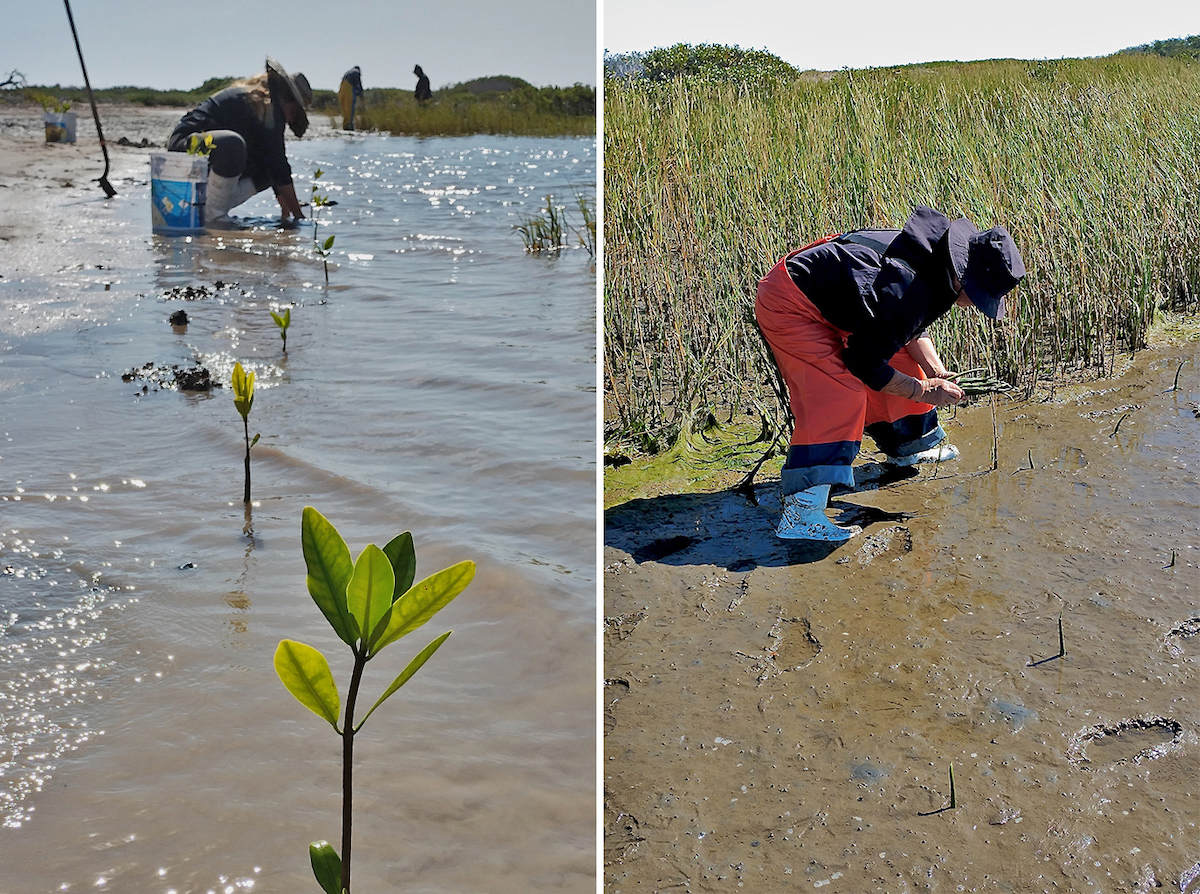
Mangroves play a critical role in protecting coastal communities and supporting biodiversity. In Mexico’s El Vizcaíno Biosphere Reserve, one of the country’s largest protected areas, a fishing village has been working to restore mangrove forests that help shield the coastline from hurricanes and other extreme weather events.
In December 2024, Mongabay reported on the work of local fisher David Borbón, who has spent years experimenting with ways to restore declining mangroves in his community. Without formal scientific education or training, Borbón conducted a series of experiments to find the best method to reforest the area’s declining mangrove forests and settled on a direct sowing technique that replicates natural patterns.
“Many scientists ask me if I’m a magician,” says Borbón. “No, I am not. I only live among the mangroves, observe their natural behaviors and try to replicate what they do. If you try to modify that, it will not work.”
With support from his family and community, the effort has resulted in the planting of more than 1.8 million mangroves, helping restore the surrounding ecosystem and strengthen the coastline’s natural defenses.