
Cambodia halts logging amid reports of illegal forest clearance

Cambodia’s environment minister ordered a halt to logging at a controversial hydropower project in 2024 following reporting on illegal forest clearance in a protected area.

On Sept. 2, 2024, Environment Minister Eang Sophalleth issued a directive suspending forest clearing and timber processing linked to the Stung Meteuk hydropower project in southwest Cambodia. The move followed multiple reports of illegal logging, including investigations by Mongabay, connected to the project’s expansion.

In a letter to tycoon and senator Ly Yong Phat, whose company is behind the dam, Sophalleth cited a range of violations, including logging outside permitted zones, transporting timber without authorization, and failing to pay required taxes. The suspension was to remain in place until proper forest management systems were established.
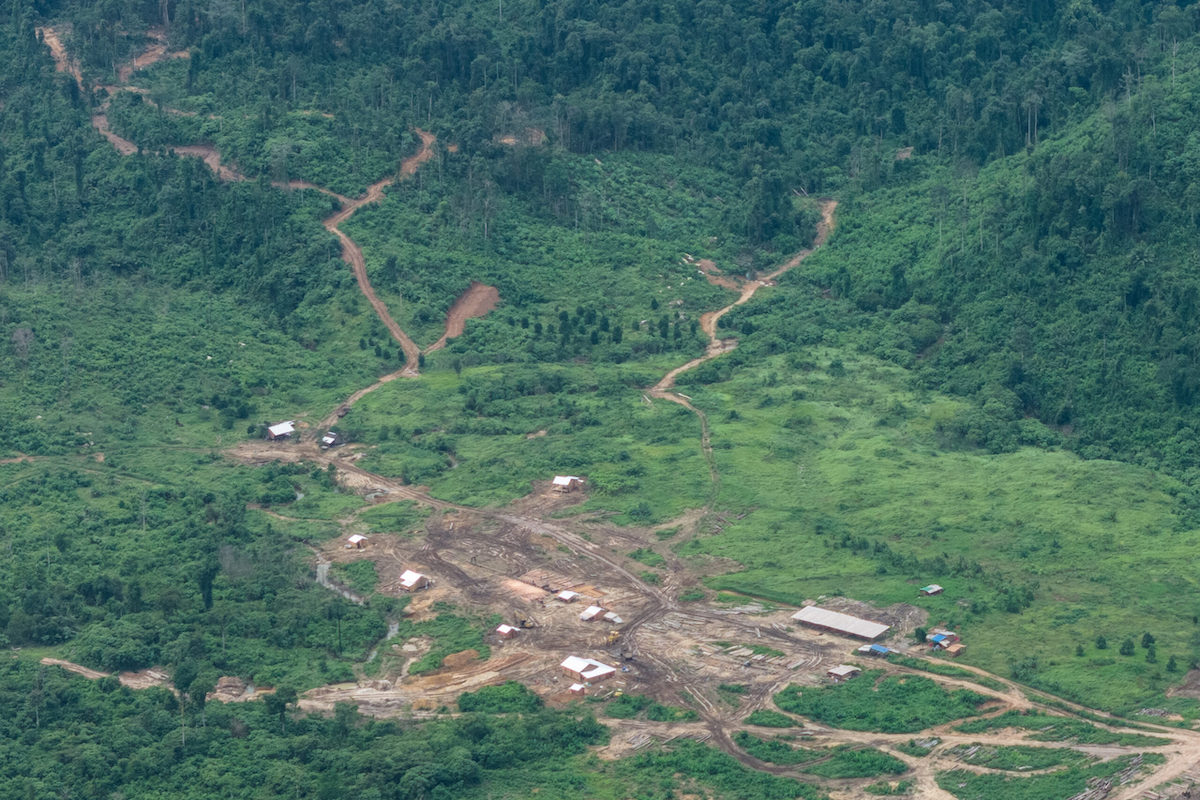
Logging routes snake out into the protected forest of Phnom Samkos Wildlife Sanctuary, with timber laundered and processed inside the Stung Meteuk project area. Image supplied by Tat Oudom.

The project overlaps with ecologically critical areas in the Cardamom Mountains, including parts of Phnom Samkos Wildlife Sanctuary, one of Cambodia’s most biodiverse rainforest landscapes and a refuge for threatened species.

Impact

The 2024 logging suspension represents a clear institutional response linked to documented environmental violations, illustrating how investigative reporting can elevate local forest crimes to national-level attention.

Mongabay’s reporting demonstrated how logging tied to the hydropower project extended beyond designated construction zones into protected forest. Journalists identified newly cut access routes reaching deep into intact rainforest, along with evidence of timber extraction and transport networks operating under the cover of development. By bringing these findings to light, the reporting contributed to increased scrutiny from authorities and helped prompt a formal government response.

The case also drew wider attention to the risks facing one of Southeast Asia’s most intact forest ecosystems, while placing a spotlight on alleged environmental violations linked to a politically connected developer. In doing so, it underscores the role of public-interest journalism in driving accountability and informing decision-making.

At the same time, this story highlights the limits of policy announcements alone. Enforcement concerns persisted at the time of reporting, with observers citing ongoing capacity and governance challenges. As of April 2026, implementation appears partial and contested, with continued questions around compliance. This underscores the gap that can remain between official directives and on-the-ground outcomes, and the need for sustained scrutiny beyond initial policy action.

Support independent environmental journalism

If you are interested in helping our brand of journalism grow, there are two excellent ways. First, consider making a donation, which directly helps us produce high-impact journalism from nature’s frontline. Second, subscribe to Mongabay’s newsletter to get the latest environmental news delivered right to your inbox, and share whatever articles move you with friends and family.

About Mongabay

Mongabay is a nonprofit environmental science and conservation news platform focused on providing original, reliable, and independent journalism from nature’s frontline. We pride ourselves on producing reporting that has substantial and tangible impacts around the world.

Banner image: Forest activists have sighted timber trucks operating deep in the jungle outside of the hydropower project site. Image supplied by Tat Oudom.