
Data journalism exposes years of unreported oil spills, leading to calls for Mexican government transparency

In February 2025, Mongabay Latam in collaboration with Mexican data journalism platform Data Crítica published an investigative report that cross-referenced official data on oil spills in the Gulf of Mexico with data from satellite images collected by scientists and evidence gathered by fishing communities to better understand the magnitude of these incidents and their various impacts.

The findings were alarming for many readers, as it became clear that official reports on spills in the Gulf of Mexico revealed only a slice of what was actually occurring in an area that is home to more than 15,000 species of birds, fish and mollusks of ecological and commercial value, and that support the livelihoods of some 80,000 fishers.

One of the most serious spills, the Ek-Balam incident of 2023, was underreported by a factor of at least 10 and perhaps as much as 200, according to the team’s new scientific analyses of satellite images.

To reveal six years worth of unreported oil spills, the journalists cross-referenced analyses of 3,000 satellite photographs from 2018 to 2024 with official incident data, establishing that oil slicks were identified during 74 months between those years, 60% of which were not officially reported.
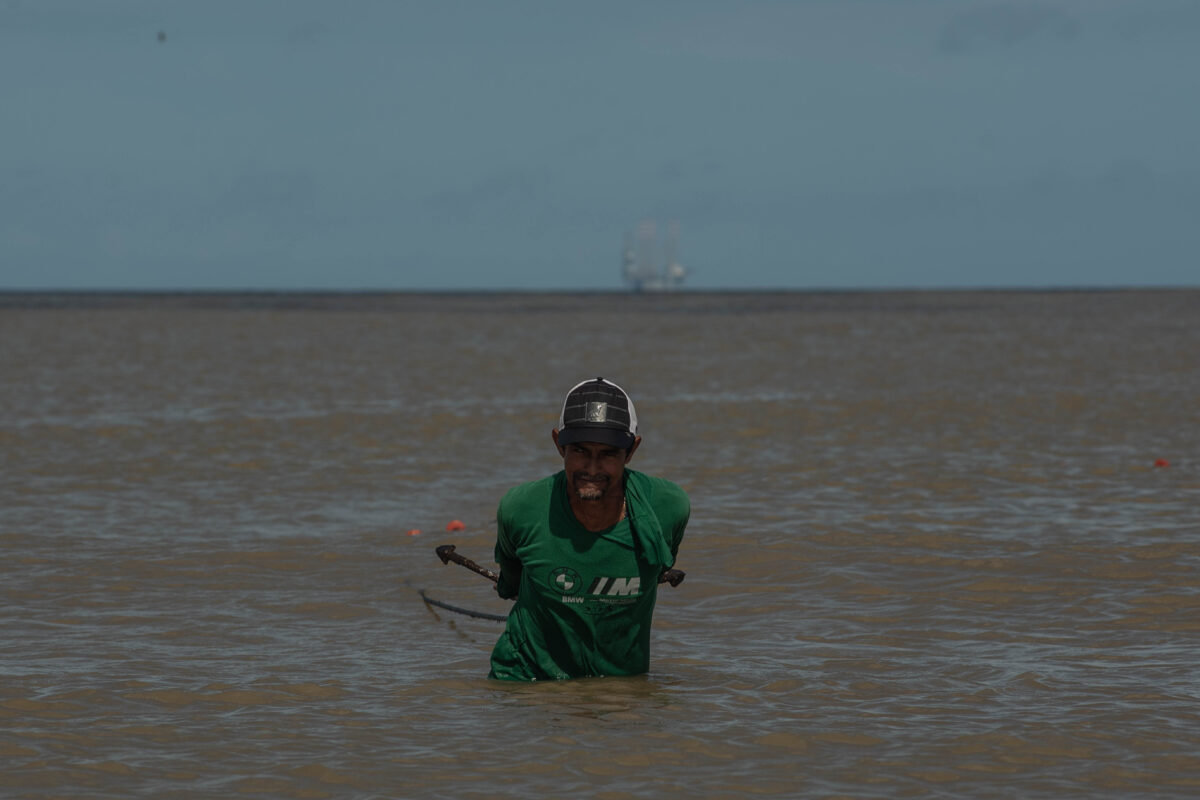
The spill reported by fisherman Elias Naal was detected by satellite by scientists. Photo: Héctor Quintanar

The team also reported that Mexico’s environmental authorities initiated just 48 sanctioning processes against oil companies between January 2018 and July 2024, and penalties were issued in fewer than half of the cases, after which eight fines were paid. The report underscored systemic opacity and limited enforcement in the sector, revealing the true environmental cost of oil extraction in the Gulf.

Impact

After the report was published, Carolina Viggiano Austria, an opposition lawmaker from Mexico’s Institutional Revolutionary Party (PRI), called for increased transparency: “There is systematic underreporting that prevents us from knowing the real impact of oil pollution on our seas… Given the level of opacity and documented underreporting, the appearance of key officials is essential to clarify the true state of oil spills in Mexico,” she stated. 

Additionally, a scientist working with Mongabay Latam to investigate the years of data later reported that the government had approached her team with an interest in continuing the oil spill monitoring system. They also received offers of funding from civil society organizations.

This collaborative investigation demonstrates how data journalism can bridge the gap between science, communities and policy, prompting institutional and civic responses to long-overlooked environmental crises. By revealing hidden pollution events and promoting accountability, Mongabay’s reporting continues to catalyze informed public debate and concrete action for ocean conservation and transparency in Mexico’s energy sector.

As Mexico’s coastal ecosystems and fishing communities face mounting threats from oil pollution, this coverage shows how journalism rooted in science and local voices can influence real-world outcomes. Mongabay’s reporting helped elevate concerns that had been ignored for years and opened the door for action to better protect people and nature.

Support independent environmental journalism

If you are interested in helping shed light on conservation issues such as this, there are two excellent ways you can do so with Mongabay. First, consider making a donation, which directly helps us continue to produce high-impact journalism from nature’s frontline. Second, subscribe to Mongabay’s newsletter to get the latest environmental news delivered right to your inbox, and share whatever articles move you with friends and family.

About Mongabay

Mongabay is a nonprofit environmental science and conservation news platform focused on providing original, reliable, and independent journalism from nature’s frontline. We pride ourselves on producing reporting that has substantial and tangible impacts around the world.

Banner image: More than 80,000 artisanal fishermen depend on the marine resources provided by the Gulf of Mexico. Photo courtesy of Héctor Quintanar.