
Environmental analysis of DRC’s M23 armed conflict gains widespread interest, opening doors for researchers

The resurgence of the M23 rebel group in the eastern Democratic Republic of Congo drew renewed attention to the region’s complex and ongoing humanitarian crisis this year, but beyond the displacement of civilians and the loss of life, researchers say the conflict has had significant — and often overlooked — environmental impacts.

In a March 2025 analysis for Mongabay, researchers Fergus O’Leary Simpson, Lara Collart and Joel Masselink explored how armed conflict in the Albertine Rift region is accelerating deforestation in some of Africa’s most biologically rich and ecologically important landscapes, like Virunga and Kahuzi-Biega National Parks, since the conflict reignited.

Using satellite data and field-based insights, the article showed how the illegal charcoal and timber trades, fueled by conflict and displacement, have driven a surge in forest loss since the fighting reignited. Armed groups, both state and non-state, have profited by taxing the illegal charcoal and timber trade coming from inside these protected areas.
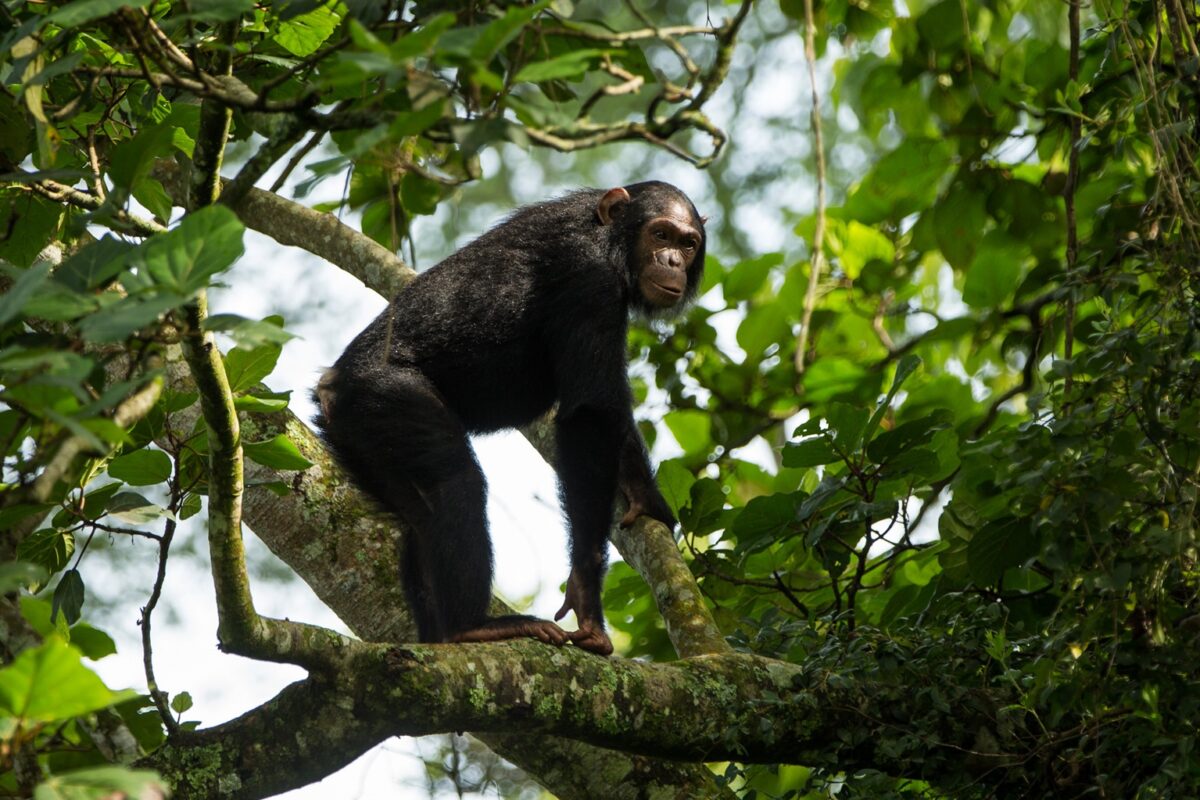
Chimpanzee, Mikeno Lodge, Virunga National Park, DRC. Image by Joseph King via Flickr.

The article offered a nuanced view of these dynamics, noting that in some cases, M23 sought to project itself as a provider of good governance by signaling temporary support for conservation, highlighting the complex relationship between conflict actors and the environment.

Impact

Since publication, the article has reached audiences well beyond the conservation and policy sectors, with the authors presenting their findings at several high-level forums. Collart and Simpson discussed it during an online seminar hosted by the University of Antwerp’s Great Lakes of Africa Centre, with their analysis for Mongabay forming the basis of their presentation.

The researchers also presented their analysis at the Conference on Environmental Crime and Human-Wildlife Conflict organized by Partenariat pour les Forêts du Bassin du Congo on August 12, 2025 in Libreville, Gabon.

Simpson was also invited to present their findings at the Congo Basin Forest Partnership (PFBC) Conference in Libreville, which gained some media coverage. He further shared the findings with key stakeholders at the GIZ and KfW head offices and the German Embassy in Kinshasa, Democratic Republic of the Congo, as well as with the Wildlife Conservation Society (WCS) team in Kigali, Rwanda. Meanwhile, Masselink presented the deforestation analysis methods at the Society for Conservation GIS conference in early July.

The authors were also invited to speak about their research on Channel Africa, a South African Broadcasting Corporation radio station, where they were interviewed for its “Africa Rise & Shine” program. A condensed version of the article was also published by Le Soir for a French-speaking audience, and some analysis within the piece was recently featured in a blog post on the EU’s Zero Deforestation hub.

“It definitely helped extend our audience beyond academia, to a more general audience of conservation enthusiasts,” said Collart of the Mongabay analysis. “We were contacted several times by people outside our usual network to discuss this specific piece of research…”

O’Leary Simpson shared, “Personally, I found that the piece opened many new doors and had quite some traction in academic and non-academic spaces.” He also referenced Mongabay in his post about the interview with Channel Africa on LinkedIn.

Support independent environmental journalism

If you are interested in helping shed light on conservation issues such as this, there are two excellent ways you can do so with Mongabay. First, consider making a donation, which directly helps us continue to produce high-impact journalism from nature’s frontline. Second, subscribe to Mongabay’s newsletter to get the latest environmental news delivered right to your inbox, and share whatever articles move you with friends and family.

About Mongabay

Mongabay is a nonprofit environmental science and conservation news platform focused on providing original, reliable, and independent journalism from nature’s frontline. We pride ourselves on producing reporting that has substantial and tangible impacts around the world.

Banner image: A mountain gorilla in Virunga National Park. Image courtesy of Fanny Schertzer via Wikimedia Commons (CC BY 3.0).