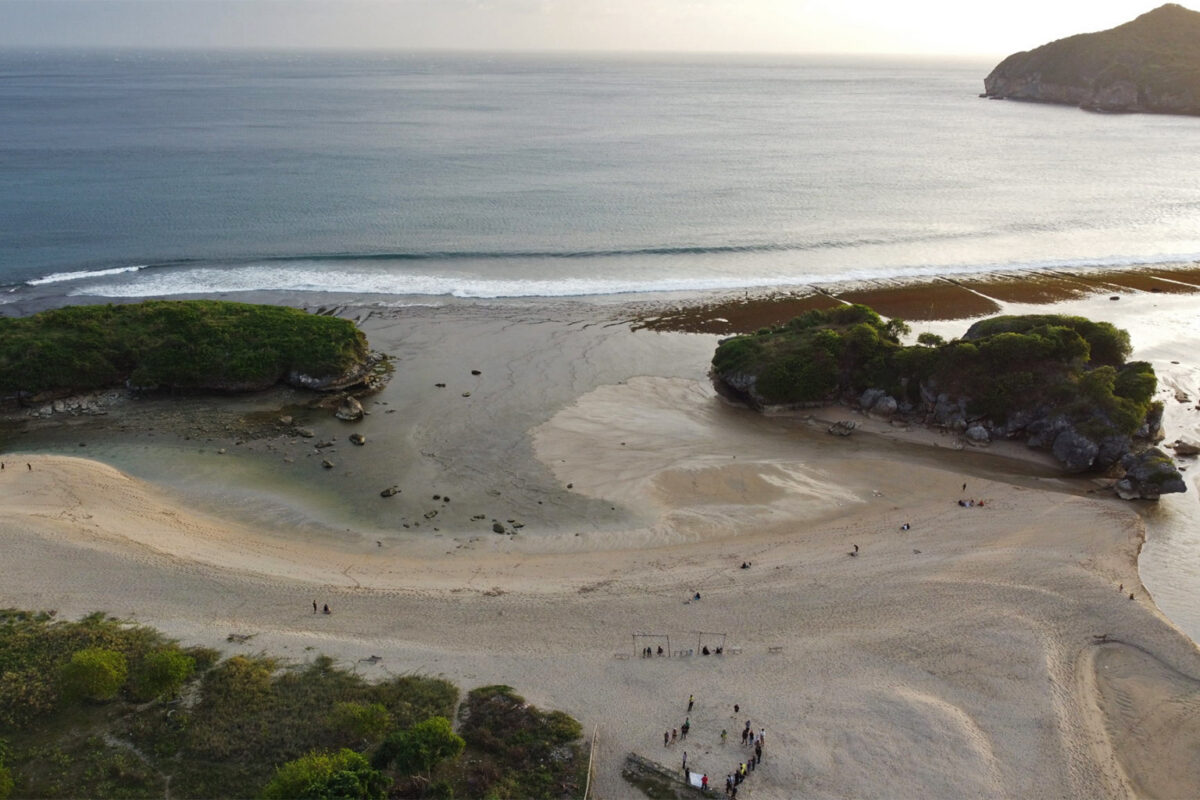
On the beaches of West Sumbawa, a coastal district in Indonesia’s West Nusa Tenggara province, sea turtles have long come ashore at night to lay their eggs. Five of the world’s seven sea turtle species — all of them threatened — nest along roughly 25 kilometers (15 miles) of the district’s coastline. For decades, those eggs were collected almost as soon as they were laid, sold openly at markets and on social media, and served as a mark of hospitality at community gatherings and government events.
In July 2022, Mongabay Indonesia published a three-part investigation in Bahasa Indonesia into the illegal harvest and sale of sea turtle eggs in West Sumbawa. An English-language version was subsequently published by Mongabay’s Global bureau in September that year.
Contributor Fathul Rakhman spent nights on nesting beaches alongside egg collectors, interviewed community members and local officials and documented the cultural and economic forces sustaining the trade. The series showed that eggs were sold freely at local markets and through Facebook, that the practice extended well into government circles, and that previous conservation efforts had not taken hold.
At the time, officials from Indonesia’s Ministry of Marine Affairs and Fisheries were already advocating for stronger local action. Mongabay’s reporting helped amplify these efforts, bringing wider public attention to the issue at a critical moment.
Impact
Within weeks of publication, the West Sumbawa regent issued a circular prohibiting the sale of sea turtle eggs. National law already protects sea turtles and their eggs, but enforcement had been limited and the issue had received almost no local media attention before 2022. The circular represented a public commitment by local authorities to address the practice, and it set the tone for the activity that followed.
Officials from the West Sumbawa Marine and Fisheries Agency stepped up outreach and education in coastal communities. Government representatives, tourism operators and local groups began coordinating more actively to secure nests, support hatchery activities and organize turtle releases. The reporter was also invited to join a multi-stakeholder WhatsApp group focused on sea turtle conservation, reflecting closer collaboration between government agencies, community members and conservation actors. At Mawil Beach, once a nightly gathering point for egg collectors, conservation-based ecotourism has since taken root.
A government official from the Ministry of Marine Affairs and Fisheries who was involved in the advocacy process, described what the coverage meant on the ground: “Through media, the story of sea turtles in West Sumbawa extends far beyond the nesting beaches,” he said. “Consistent, accurate reporting helps transform conservation from a local concern into a shared public agenda, strengthening community support and policy commitment.”