In October 2025, Mongabay published a story (first first published by Mongabay Indonesia here and here) that explained how researchers had confirmed that the critically endangered Tapanuli orangutan, previously thought to live only in Sumatra’s Batang Toru forest, also inhabited a peat swamp forest 32 kilometers (20 miles) away in the Lumut Maju village forest.
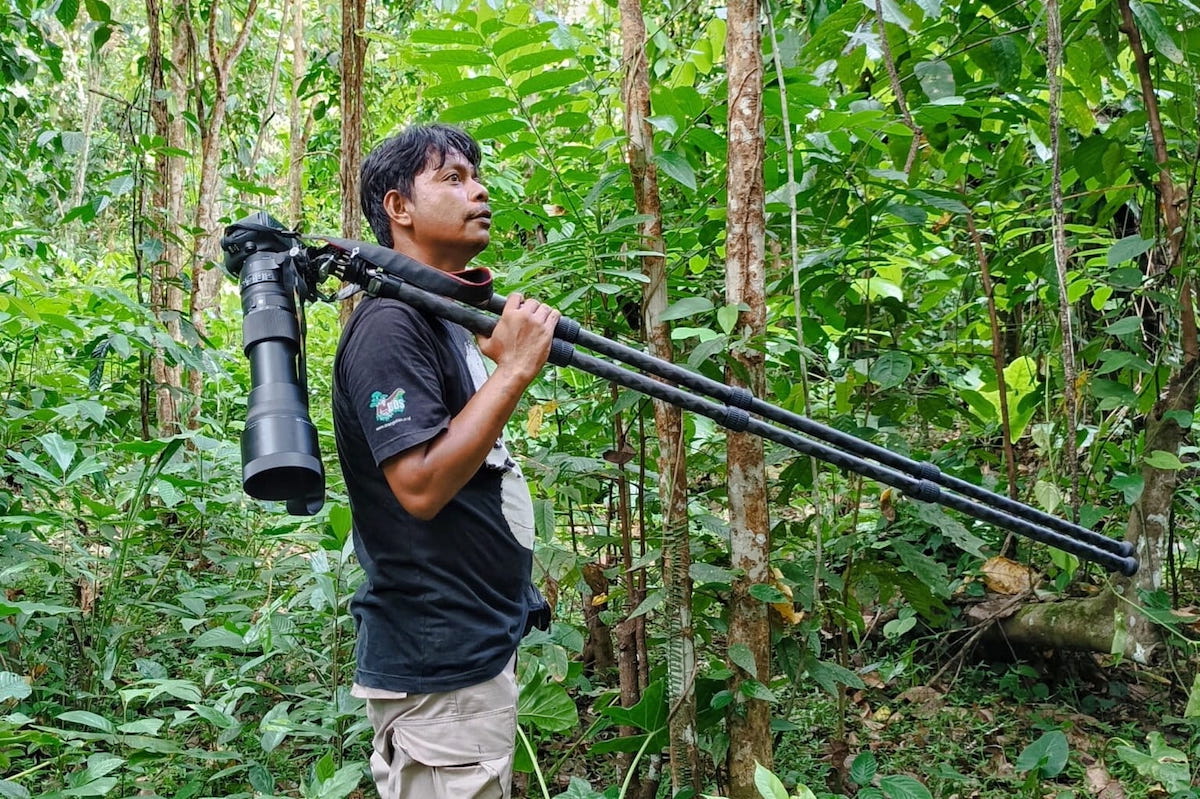
The finding was made public in Mongabay’s report after Mongabay Indonesia journalist, Junaidi Hanafiah, accompanied a field team from the Sumatran Orangutan Conservation Foundation-Orangutan Information Centre (YOSL-OIC) on a survey of Lumut Maju. On Sept. 26, 2025, Hanafiah successfully photographed a mother and infant orangutan in the forest. This was the first confirmed visual record of Tapanuli orangutans outside Batang Toru.
Hanafiah’s photographs and field documentation, alongside prior reports of nests and sightings, laid the groundwork for a scientific investigation. DNA analysis of fecal samples verified the Lumut Maju apes as Tapanuli orangutans, marking the first confirmed record of the species outside Batang Toru.
Impact
The finding highlighted the conservation value of nonprotected peat swamps, which are rapidly being cleared for oil palm plantations, threatening the orangutans’ survival. “In 2025 alone, there’s been exceptional land clearing of forests, and now the remaining forest is less than 1,000 hectares [2,500 acres],” said Rio Ardi, research manager at YOSL-OIC.
This finding possibly extends the known range of the species, previously thought to be limited to the Batang Toru landscape. According to YOSL-OIC, the discovery provides critical information for conservation strategies, highlighting the importance of overlooked peat swamp forests as potential habitats for the critically endangered Tapanuli orangutan.