For generations, the seasonal jamun harvest has formed the backbone of local livelihoods in India’s Bahadoli, a village in Maharashtra’s Thane district popularly known as Jambhulgaon, or the village of jamun trees. In 2024, however, unseasonal rainfall disrupted this long‑established cycle. Mongabay India’s reporting documented how shifting weather patterns affected this sweet-and-sour fruit’s yields, and this reporting later prompted readers to reach out in support of the community.
The feature was published in March 2025 as part of Project Dharitri, a joint undertaking with social impact organization Asar and Marathi-language media platform BaiManus in a collaboration aimed at highlighting climate and gender issues for a wide audience by publishing the features in both English and Marathi. Together, the partners examined the impacts of erratic rainfall on Bahadoli’s jamun crop, describing how heavy monsoon rains delayed flowering, caused fruit to fall prematurely and forced harvesting during persistent rainfall.
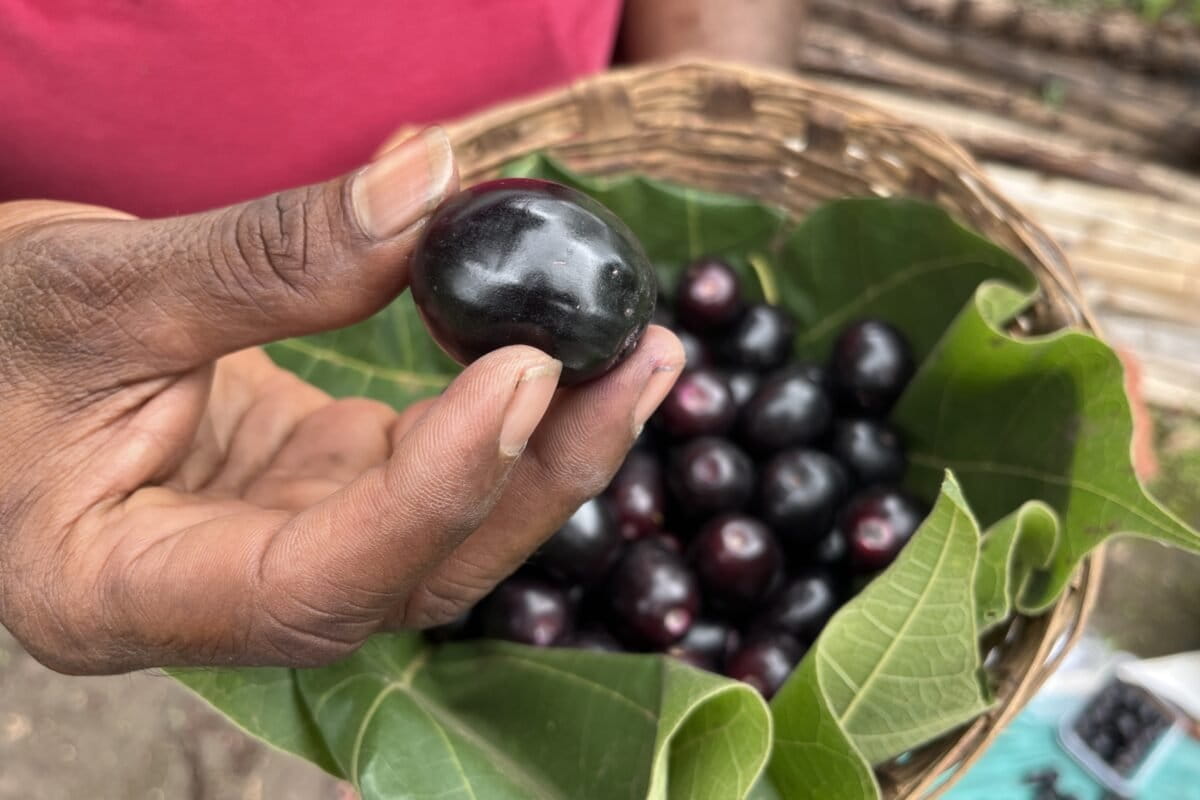
Jamuns collected from Syzygium cumini trees in Bahadoli, a village in Thane district, Maharashtra, which is also popularly known as Jambhulgaon or the village of jamun. Image by Rushikesh More.
We are nonprofit.
Help us tell stories of biodiversity loss, climate change & socio-environmental injustice.
Farmers and vendors interviewed for the article described visible losses. One cultivator explained that the delayed flowering meant jamuns ripened during the monsoon rather than summer, when demand is typically highest. Another farmer estimated that almost 90% of their usual produce had gone to waste that season.
Vendors also described how the rains limited their ability to sell fruit by the roadside, a seasonal activity that many households depend on for income. Several said they were able to harvest and sell only small quantities, and sheltered under umbrellas during heavy downpours.
Impact
Following publication, people from across Maharashtra reached out to BaiManus asking if they could support Bahadoli’s farmers’ fruit sales. According to BaiManus, these inquiries helped connect interested buyers with farmers, facilitating the sale of jamuns across the state, a notable shift for a village where sales are typically local and seasonal.
The story also drew significant online attention. BaiManus reported that it was among the most widely viewed stories from the collaboration with Mongabay, receiving more than 200,000 views on Facebook alone. The coverage also prompted conversations among farmers about local biodiversity loss, with many farmers beginning to ask how they could preserve native species. These outcomes illustrate how independent reporting can encourage public response and community‑level support.
Mongabay India’s coverage of this poor jamun harvest documented the lived experiences at a moment of disruption and disseminated their stories beyond the village. The responses that followed underscore the role independent journalism can play in connecting local realities with broader public awareness, opening pathways for dialogue, support and reflection as communities navigate environmental change.
Support independent environmental journalism
If you are interested in helping shed light on conservation issues such as this, there are two excellent ways you can do so with Mongabay. First, consider making a donation, which directly helps us continue to produce high-impact journalism from nature’s frontline. Second, subscribe to Mongabay’s newsletter to get the latest environmental news delivered right to your inbox, and share whatever articles move you with friends and family.
About Mongabay
Mongabay is a nonprofit environmental science and conservation news platform focused on providing original, reliable, and independent journalism from nature’s frontline. We pride ourselves on producing reporting that has substantial and tangible impacts around the world.
Banner image: Geeta Kini, a jamun cultivator, holds an umbrella to protect the produce from heavy rainfall. She says that previously, at least 50 women would sell jamuns by the roadside. This year, there were very few of them, owing to a huge crop loss. Image by Rushikesh More.
Stay updated
Delivering news and inspiration from nature’s frontline.