In September 2025, the world’s largest sovereign wealth fund, Norway’s $1.6 trillion Government Pension Fund Global, divested its $6.8 million stake in a French mining company operating in Indonesia. The action followed a recommendation from the fund’s Council on Ethics, which cited “an unacceptable risk” of severe environmental damage and gross human rights violations linked to the company’s operations at the PT Weda Bay Nickel (WBN) mine in Halmahera.
Mongabay has long covered the ecological and social implications of the nickel boom in Indonesia, particularly in Halmahera. In 2025, Mongabay’s Indonesia-based bureau launched a major 24-article special series, Demam Nikel (“Nickel Fever”). The bureau’s managing editor, Sapariah Saturi, said that the outlet has been reporting on the PT Indonesia Weda Bay Industrial Park (IWIP) since at least 2021. “We cover it via so many angles. Then the other media outlets [began] following this issue. Then some NGOs also focus[ed] on this,” Saturi said.
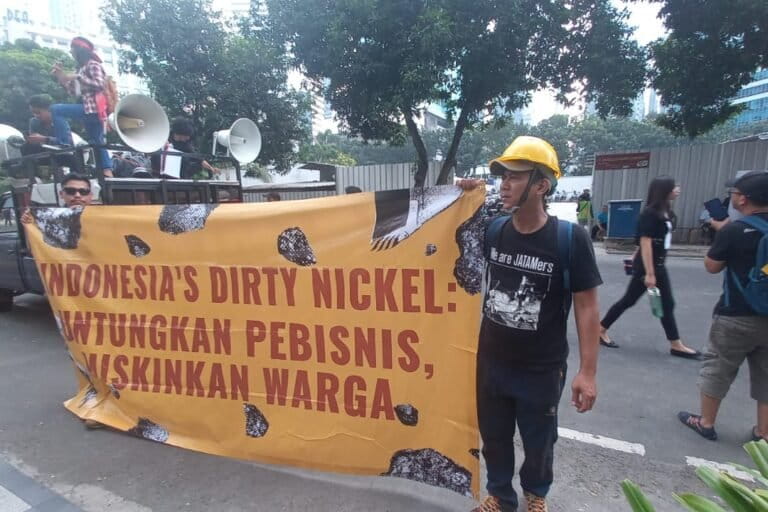
Protests against the devastating floods and landslides in Halmahera, which are strongly suspected to be caused by nickel mining and its related industries. Photo by Christ Belseran/Mongabay Indonesia
We are nonprofit.
Help us tell stories of biodiversity loss, climate change & socio-environmental injustice.
In the same 2025 article that reported on Norway’s divestment, Mongabay contextualized the decision within broader concerns about forest loss, biodiversity, and Indigenous rights. The article detailed how Weda Bay Nickel, which sits in the Wallacea Biodiversity Hotspot, had already cleared over 2,700 hectares (6,700 acres) of rainforest since 2019, far exceeding its plan, thereby threatening endemic species and risking their extinction before they’re documented. It also highlighted threats to the O’Hongana Manyawa (“Forest Tobelo”), a largely uncontacted Indigenous community of 3,500 people, and cast light on the ethical complexities of sourcing nickel for so-called ‘green’ technologies.
The case highlights growing investor scrutiny and concerns over whether nickel for electric vehicle batteries and other clean-energy technologies can be sourced without destroying tropical forests, or violating Indigenous rights.
In some cases, it was Mongabay’s persistent reporting that first raised public awareness of some of the issues tied to mining. For instance, Survival International’s Asia Research and Campaigns Director reached out to Mongabay journalist Hans Nicholas Jong following his article about Norway’s decision to express her appreciation for the “great work” over the years. “I remember your article about the threat of mining there in 2018, it was one of the first things I’d ever seen published about the O’Hongana Manyawa!”
The Ake Jira forest in Central Halmahera, which has been cleared for nickel mining. Photo by Christ Belseran/Mongabay Indonesia.
Throughout the years, Survival International has looked to Mongabay for information on the intersection of Indigenous peoples and mining. In 2024, the organization contacted Christ Belseran, a Mongabay contributor who wrote about the Tobelo Dalam (O’Hongana Manyawa) Indigenous People to hear directly from journalistswho covered the storyand went orhad seen the TobeloDalam people affected by nickel mining. In early 2025, Survival International again contacted Mongabay journalists for further information on this subject.
Impact
In early September 2025, Mongabay Indonesia managing editor Saturi moderated a discussion during a Transparansi International Indonesia (TII) event, where several representatives from the French mining company were present. One of them told her that Mongabay is among the outlets they follow to stay informed on nickel-related developments.
Shortly after the event, representatives from the mining company met with Mongabay Indonesia journalists with an aim to discuss and better understand the issues related to the nickel industrial area, including WBN, given Mongabay Indonesia’s in-depth and ongoing coverage.
TII also released a report on corruption vulnerabilities in Indonesia, specifically regarding Chinese investment in nickel industries, featuring a case study on PT IWIP. This is the second time TII has released research on nickel mining in Halmahera, and while preparing the report, TII researchers discussed with Mongabay, and the final publication included two photos from a 2024 Mongabay Indonesia article. This marked the second time TII included Mongabay’s work in its research on Halmahera.
In addition to TII, Komnas HAM (Indonesia’s National Commission on Human Rights) engaged Mongabay as a source in its investigations into nickel mining and industrial operations in Halmahera, including IWIP, during 2023 and 2024.
These examples of the news produced being put to use reflects Mongabay’s role in shaping narratives and providing trusted information that reaches corporations, NGOs, government oversight bodies, and policymakers. Through investigations, interviews, photos, data analysis, and fieldwork, Mongabay has become a key part of the information landscape. Although not directly cited in Norway’s divestment decision, Mongabay’s sustained attention to the Weda Bay Nickel mine and broader industry trends demonstrates the power of environmental journalism for raising awareness, supporting transparency and informing global action.
Support independent environmental journalism
If you are interested in helping shed light on conservation issues such as this, there are two excellent ways you can do so with Mongabay. First, consider making a donation, which directly helps us continue to produce high-impact journalism from nature’s frontline. Second, subscribe to Mongabay’s newsletter to get the latest environmental news delivered right to your inbox, and share whatever articles move you with friends and family.
About Mongabay
Mongabay is a nonprofit environmental science and conservation news platform focused on providing original, reliable, and independent journalism from nature’s frontline. We pride ourselves on producing reporting that has substantial and tangible impacts around the world.
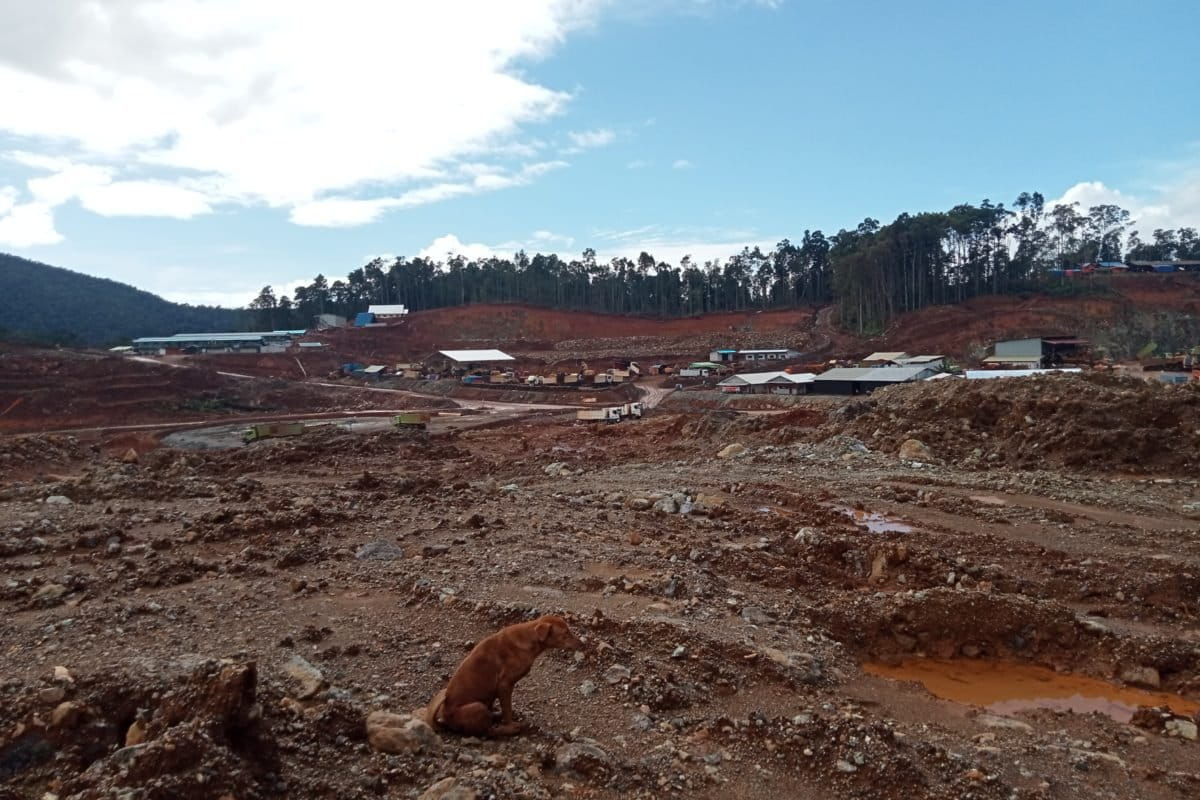
Banner image: Nickel mining activity in the PT IWIP industrial area in Central Halmahera. Image by Irfan Maulana/Mongabay Indonesia.
Stay updated
Delivering news and inspiration from nature’s frontline.