
Report on illegal roads in Colombia’s Amazon captures the eye of the national congress

In June 2025, Mongabay Latam published a geographic analysis that documented a network of 1,926 kilometers (about 1,200 miles) of illegal roads in the most active deforestation hotspots transforming the Colombian Amazon. The report revealed that more than 100 kilometers (about 62 miles) of these roads cut across protected areas and Indigenous reserves, fragmenting critical ecosystems linking Chiribiquete National Park with the Nukak Reserve.

A team of journalists traveled to the most affected Amazonian departments (Caquetá, Meta, and Guaviare) to document how legal and illegal activities intertwine along these roads. Their reporting showed how roads have become drivers of deforestation, cattle ranching, and illicit crop cultivation, pushing the Amazon ever closer to its limit.

In the Colombian Amazon, there are more than 28,000 kilometers (about 17,400 miles) of roads stretching across protected areas, Indigenous reserves, and ecologically important zones, a distance equivalent to nearly 28 times the route from Bogotá to Cartagena. While these roads connect communities, they also fragment the rainforest.
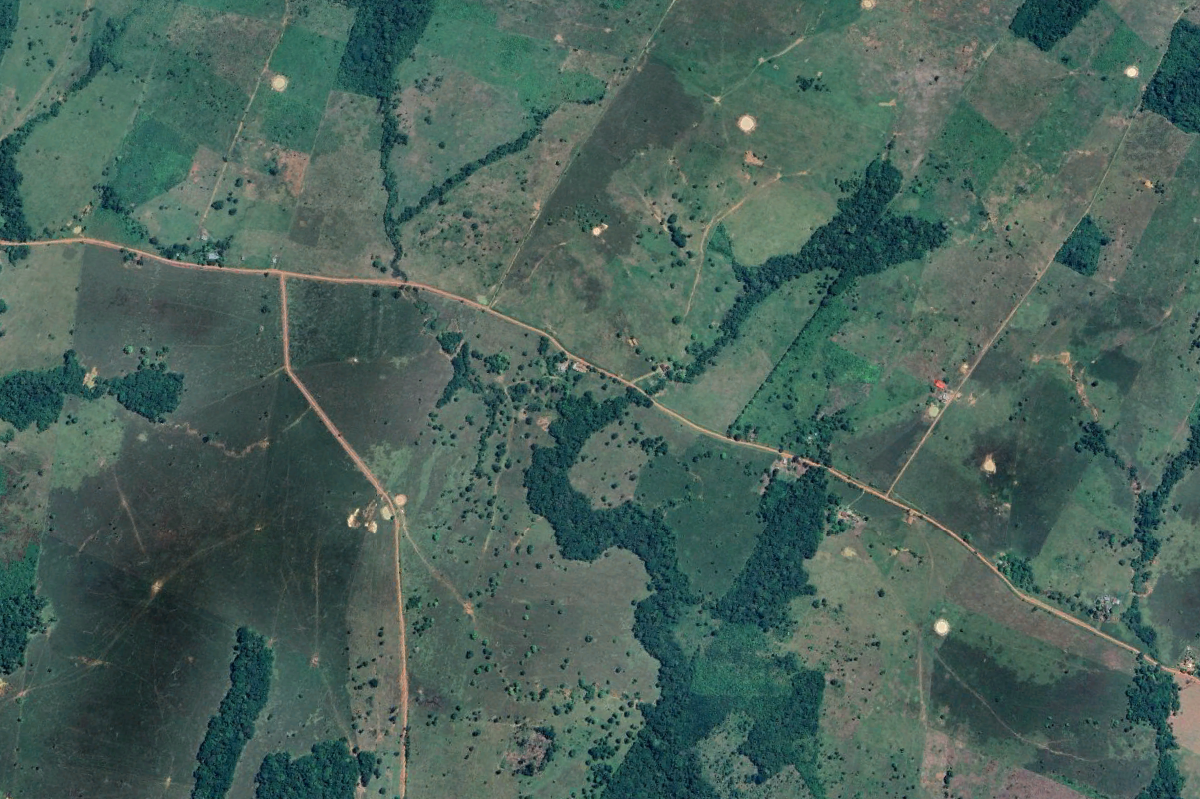
Deforestation caused by the Calamar-Miraflores road, which threatens the Nukak Reserve and Chiribiquete National Natural Park. Photo: Google Earth – Mongabay Latam

“The constant trend of growth in illegal roads in the Colombian Amazon has a very strong impact in terms of fragmentation and deforestation, especially in areas with environmental restrictions, where the expansion has been most intense,” said Maryi Serrano of the Fundación para la Conservación y el Desarrollo Sostenible.

Impact

Following the publication, the report attracted attention in the Colombian Congress. Congresswomen Julia Miranda and Leyla Rincón emphasized the need for Congress to address the issue of deforestation in the departments of Meta, Caquetá, and Guaviare. Miranda, the former head of the National Parks agency, said she would ask the agency to explain the increase in roads in and around Chiribiquete National Park. Likewise, Rincón told Mongabay Latam that she would organize meetings with the Ministries of Environment and Transportation to present the case to the authorities. Former Deputy Minister of the Colombian Ministry of Environment Sandra Vilardy also reposted the special report on her X account.

In October 2025, David Bettin, Secretary-General of the Fifth Committee of the Colombian Senate, informed Mongabay Latam that he would invite the journalists who wrote the report to present their findings to Congress. This meeting will enable lawmakers to familiarize themselves with the case in detail and discuss potential legislative measures on environmental and agricultural issues in the country.

By February 2026, the parliamentary advisor confirmed with Mongabay that the issue will be addressed once the Colombian Congress resumes its activities in March. 

Thanks to Mongabay’s independent, nonprofit journalism, this geographic analysis made the spread of illegal roads and deforestation in Colombia’s Amazon visible in national legislative circles.

Support independent environmental journalism

If you are interested in helping shed light on conservation issues such as this, there are two excellent ways you can do so with Mongabay. First, consider making a donation, which directly helps us continue to produce high-impact journalism from nature’s frontline. Second, subscribe to Mongabay’s newsletter to get the latest environmental news delivered right to your inbox, and share whatever articles move you with friends and family.

About Mongabay

Mongabay is a nonprofit environmental science and conservation news platform focused on providing original, reliable, and independent journalism from nature’s frontline. We pride ourselves on producing reporting that has substantial and tangible impacts around the world.

Banner image: 1,926 kilometers (about 1,200 miles) of illegal roads analyzed by Mongabay Latam are destroying the rainforest within Indigenous reserves and protected areas of the Colombian Amazon. Illustration courtesy of Alma Ríos.