
Reporting on solar canoes in Ecuador’s Amazon helps project expand and secure funding

In September 2025, Mongabay published a report on an Indigenous-led solar canoe initiative that began in Ecuador’s Amazon and has since expanded to communities in Brazil, Peru, Suriname and the Solomon Islands. The following month, Mongabay Latam published a companion story in Spanish focused on Kara Solar’s energy transition work in Ecuador’s Achuar territory.

Together, the stories documented how Kara Solar is working with Achuar Indigenous communities to develop solar-powered canoes, recharge stations and renewable energy infrastructure in a region where transportation and electricity have long depended on costly and polluting fossil fuels.

The reporting showed how solar-powered river transport can reduce fuel costs, pollution and noise while offering an alternative to road expansion, a driver of deforestation and extractive activity.

The coverage highlighted Kara Solar’s community-led model, in which Indigenous leaders and technicians are operating, maintaining and managing the technology locally. Mongabay Latam’s reporting also traced the initiative’s roots in Achuar decision-making and worldview, including the first solar canoe’s 1,800-kilometer journey across Amazonian rivers.
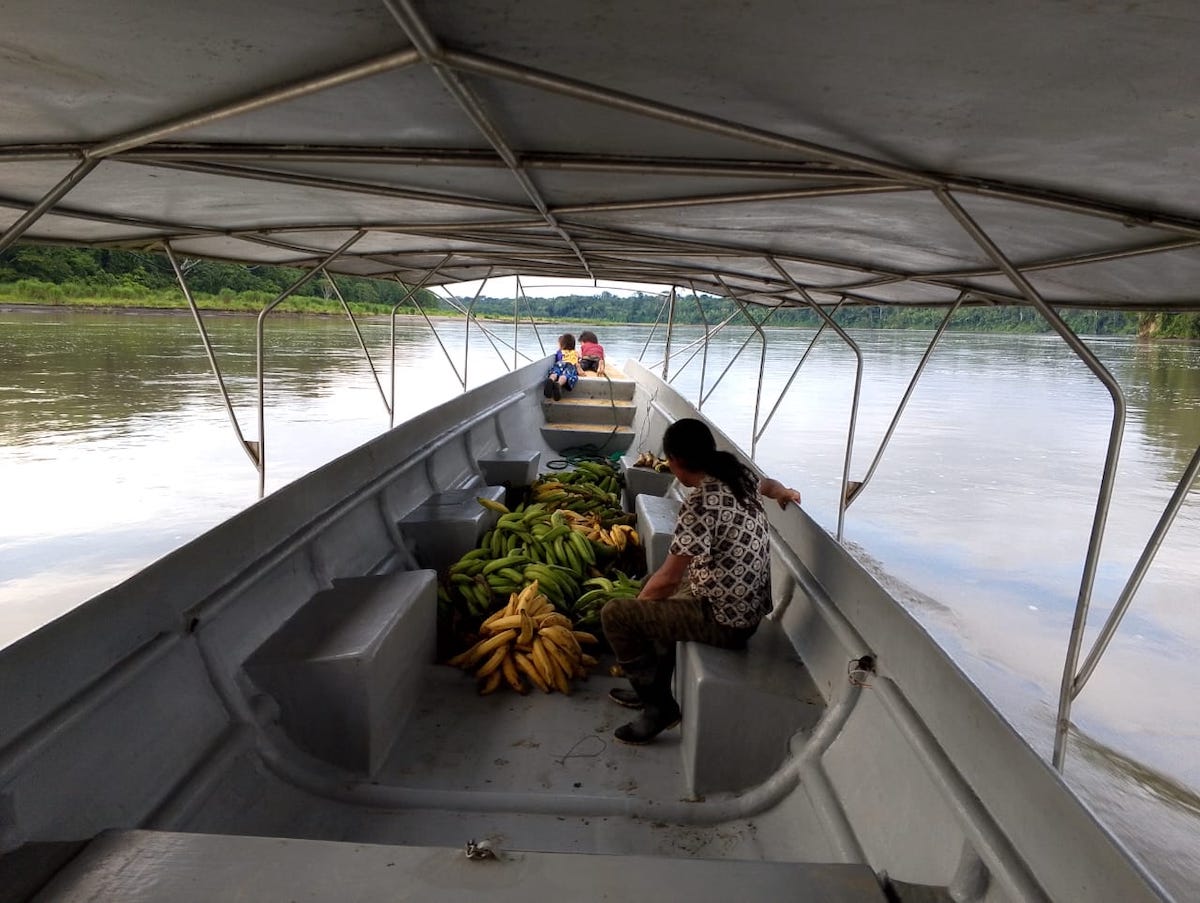
Tapiatpia, the first solar boat built by Kara Solar, is still operating nearly a decade later and increasingly supports clean, local economies. Image courtesy of the Kara Solar Foundation.

By centering Indigenous leadership and practical climate solutions, the stories helped readers understand how renewable energy can support territorial autonomy, reduce pollution and strengthen non-extractive economies in one of the most biodiverse regions on Earth.

Impact

Oliver Utne, Kara Solar’s director of partnerships and co-founder, told Mongabay that the coverage contributed directly to the project’s momentum. Following publication, Kara Solar secured two new funding sources, received strong positive attention from the public, and other journalists also reached out to cover the initiative.

The reporting also helped draw interest from beyond Ecuador. “In the last quarter, Indigenous communities in Brazil, Colombia and Peru have contacted us because they are interested in replicating our work with the Achuar in their territories,” Utne said.

That response came at a critical moment. Mongabay’s reporting noted that access to financing remains one of the biggest obstacles facing Kara Solar as it works to make solar-powered river transportation accessible to more Amazonian communities. By bringing wider attention to the initiative, Mongabay’s coverage helped amplify an Indigenous-led model for renewable energy, cleaner transportation and community autonomy across the Amazon Basin.

Support independent environmental journalism

If you are interested in helping Mongabay tell more stories about innovative approaches like this, there are two excellent ways you can do so with Mongabay. First, consider making a donation, which directly helps us continue to produce high-impact journalism from nature’s frontline. Second, subscribe to Mongabay’s newsletter to get the latest environmental news delivered right to your inbox, and share whatever articles move you with friends and family.

About Mongabay

Mongabay is a nonprofit environmental science and conservation news platform focused on providing original, reliable, and independent journalism from nature’s frontline. We pride ourselves on producing reporting that has substantial and tangible impacts around the world.

Banner image: Ángel Wasump conducts navigation tests on the new solar-powered Peque-Peque canoe model in Ecuador. Photo courtesy of Jerónimo Pineda / Kara Solar.