
Resort plan halted after Mongabay report prompts land grabbing conviction

A conservation area in Brazil’s northeastern state of Piauí was facing development until environmental journalism helped drive accountability: in March 2025, Mongabay Brasil published an investigation on the controversial reclassification of a protected area along the coast of the state. Once designated as Monumento Natural das Itans (Itans Natural Monument), the 57-hectare (141-acre) area – which is key habitat for vulnerable manatees and sea turtles – was downgraded to an Área de Proteção Ambiental (Environmental Protection Area), a category that permits greater development. 

The move sparked outcry from local fishers and environmental groups, who warned that it opened the door to unregulated tourism infrastructure in one of the last strongholds of Brazil’s manatee population.

The area also contains rare and sensitive ecosystems, including mangroves, restinga (a threatened ecosystem type consisting of plants that grow on sandy, acidic, and nutrient-poor soils), and sambaquis which are prehistoric shell mounds of archaeological importance. The area also serves as a feeding and reproduction zone for manatees and sea turtles, including the olive ridley and green turtle species.
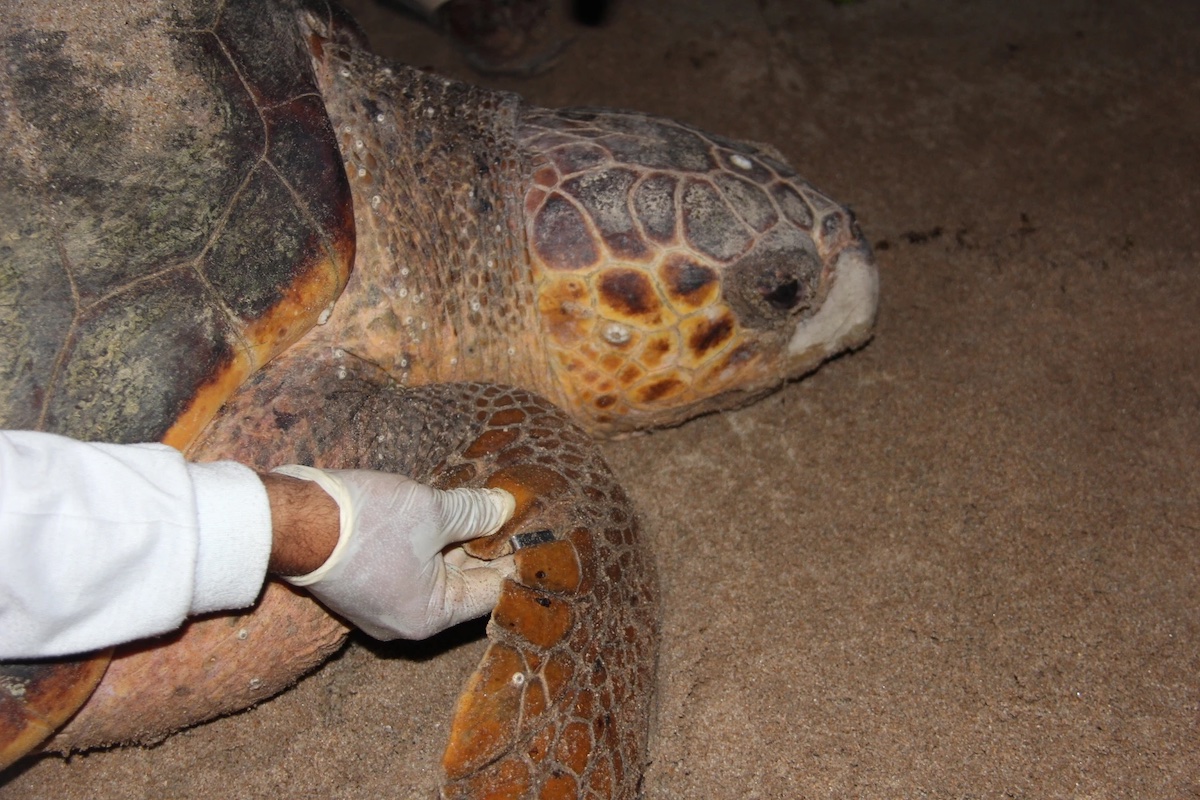
Olive ridley sea turtle (Lepidochelys olivacea) on a beach in the Itans Environmental Protection Area. Photo: Instituto Tartarugas do Delta/press release

The article revealed how the reclassification occurred without the required environmental studies or public consultations, and linked the changes to growing interest from real estate developers. Community members interviewed by Mongabay described harassment, destruction of boats, and arson linked to the dispute. 

“This village used to belong to fishers and farmers,” one resident told Mongabay. “Now, real estate speculation has brought people who want to push us out.”

Impact

Authorities took note: following the publication, Brazil’s Federal Police and environmental agency confirmed that the article had contributed to a criminal sentence against the businessman behind the proposed luxury resort. He was convicted of land grabbing, ordered to vacate the area, restore degraded ecosystems, and pay fines.

In January 2026, another impact occurred when Brazil’s Federal Court suspended the state law that had downgraded the Itans Natural Monument status to an Environmental Protected Area. The decision demanded an immediate halt to all environmentally degrading activities at the site and required the state to monitor the area.

This outcome is a testament to the power of journalism to elevate local voices, reveal illegal activity and prompt legal accountability. In this case, independent reporting played a role in halting an environmentally damaging project as well as protecting a fragile coastal ecosystem, along with the rights of traditional fishing communities.

Support independent environmental journalism

If you are interested in helping shed light on conservation issues such as this, there are two excellent ways you can do so with Mongabay. First, consider making a donation, which directly helps us continue to produce high-impact journalism from nature’s frontline. Second, subscribe to Mongabay’s newsletter to get the latest environmental news delivered right to your inbox, and share whatever articles move you with friends and family.

About Mongabay

Mongabay is a nonprofit environmental science and conservation news platform focused on providing original, reliable, and independent journalism from nature’s frontline. We pride ourselves on producing reporting that has substantial and tangible impacts around the world.

Banner image: An aerial view of the Itans Natural Monument. Drone photo by Adriana Amâncio for Mongabay.