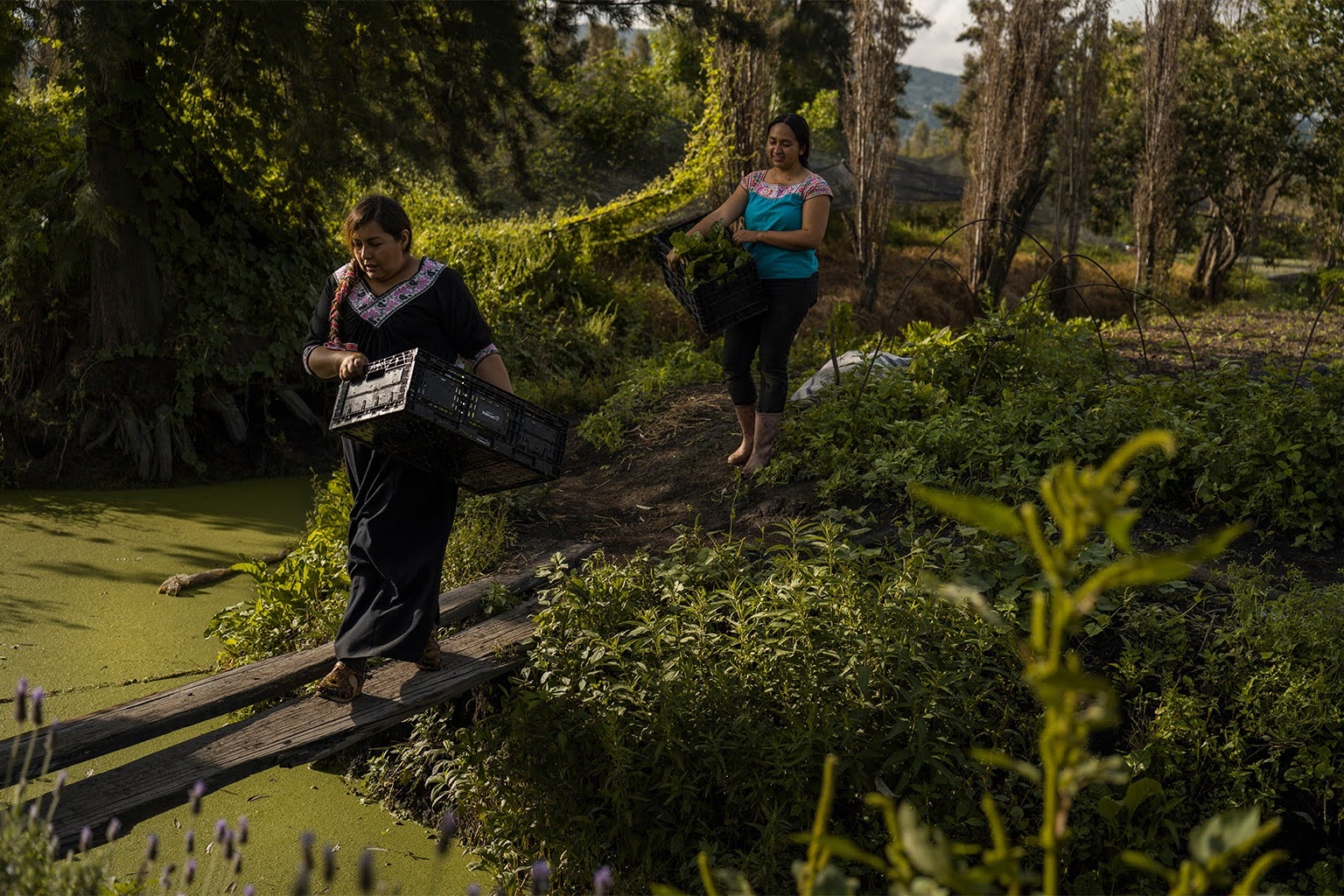
In 2025, Mongabay published the video “How women protect Mexico City’s ancient island farms,” a collaboration with the Associated Press and part of the Hands On series. It highlights women working to preserve Mexico City’s chinampa system, sustainable floating farms built by the Aztecs thousands of years ago as part of Tenochtitlan, in what is now Mexico City.
The video documented how these farmers are maintaining a centuries-old agricultural practice that once helped feed the Aztec capital, while facing mounting threats from urban expansion, pollution, and water scarcity. Centered on the story of one local farmer, Cassandra Garduño, the piece combined on-the-ground reporting with visual storytelling to highlight both environmental and cultural resilience in one of the world’s largest cities.
Gaining early recognition in October 2025, the AP featured the project as an honorable mention in its “Best of the Week” series, citing its strong storytelling and reporting. Following publication, viewers contacted Mongabay and the AP seeking ways to support Garduño and other women working to preserve the chinampas. A month later, the impact continued to grow, with the producers of the Atlas Obscura podcast inviting a team member for an episode focused on the chinampas and efforts to protect Xochimilco.
The project marked Mongabay’s first video collaboration with the Associated Press, and the beginning of a broader partnership, with Mongabay joining as a member newsroom to publish AP’s Climate Change and Environment coverage.
In 2025, Lucia Torres, Mongabay’s Video Managing Editor who led the project as producer, was awarded the European Media Leaders Climate Fellowship from the Solutions Journalism Network. Funding from this fellowship enabled the team to access services “rarely available in AP video coverage… The result is a captivating seven-minute piece that takes the audience deep into these ancient island farms,” said AP’s Teresa de Miguel Escribano and Félix Márquez, highlighting the value of this partnership.