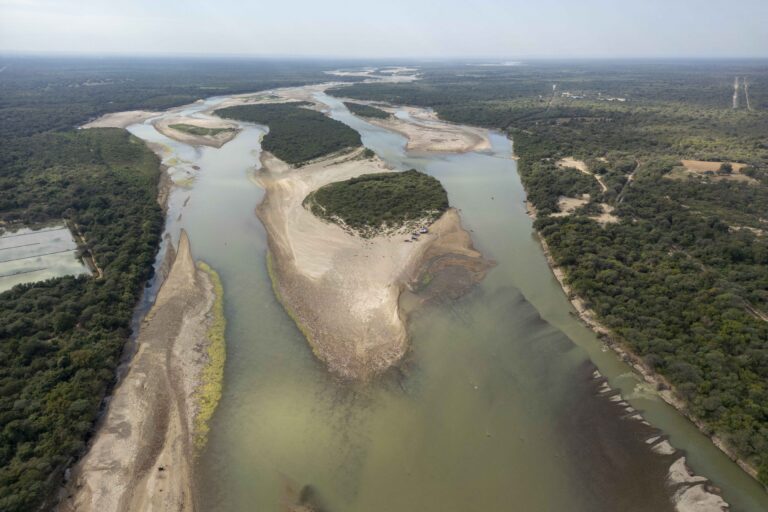
Communities raised concerns that mining waste containing mercury, arsenic, lead, cadmium and other heavy metals was entering waterways connected to the Pilcomayo. Research cited by Mongabay found some heavy-metal concentrations above recommended limits near Villa Montes and elevated levels of arsenic, mercury or lead among some Indigenous residents.
Regional authorities acknowledged contamination but disputed claims that it was severe, saying further water-quality research was underway. The investigation also reported allegations of pollution linked to gas extraction; the companies approached by Mongabay did not respond before publication.
Deforestation, cattle ranching, industrial soy production and aggregate extraction are also degrading riverside forests and increasing erosion. Fish populations face additional pressure from overfishing, illegal nets, infrastructure and disrupted migration, with one former Indigenous leader estimating that fishing has declined by 60% over two decades.
As a possible response, environmental organizations and Indigenous communities are proposing the 351,426-hectare (868,400-acre) Pilcomayo Corridor. The conservation area would protect riverside ecosystems while allowing sustainable traditional activities, helping safeguard wetlands, migratory fish, jaguar habitat and regional water and food security.
Impact
After the article was published, Congresswoman Cecilia Requena, now part of the Unity Bloc (Bloque de Unidad), a Bolivian electoral coalition in the Bolivian parliament, contacted the Mongabay Latam staff writer Iván Paredes who reported the story and requested additional information about pollution in the Pilcomayo River. She expressed interest in using the reporting to seek information from regional institutions on recent studies and indicated that she intended to request new research so decision-makers would have updated evidence about pollution in the Paraguay River’s longest western tributary.
Requena first introduced the issue in December 2025 and by early August 2026, she reported that the situation regarding the Pilcomayo and the Weenhayek people was addressed by the Chamber of Deputies Commission on Indigenous, Native, and Peasant Nations and Peoples, Cultura and Interculturality during a congressional committee hearing where Requena outlined the issue and shared the Mongabay Latam article.
This use of Mongabay’s reporting demonstrates how independent journalism can provide information to inform potential legislative oversight and further exploration.
For Indigenous communities that have warned for years about changes in the Pilcomayo, increased institutional attention is an important step. Reliable, evidence-based journalism can bring local observations, scientific findings and official responses together in one public record, helping decision-makers identify unanswered questions and determine where further action is needed.
Support independent environmental journalism
If you are interested in helping shed light on conservation issues such as this, there are two excellent ways you can do so with Mongabay. First, consider making a donation, which directly helps us continue to produce high-impact journalism from nature’s frontline. Second, subscribe to Mongabay’s newsletter to get the latest environmental news delivered right to your inbox, and share whatever articles move you with friends and family.
About Mongabay
Mongabay is a nonprofit environmental science and conservation news platform focused on providing original, reliable, and independent journalism from nature’s frontline. We pride ourselves on producing reporting that has substantial and tangible impacts around the world.
Banner image: Fishermen on the Pilcomayo River maintain that there are fewer fish and that they are smaller in size. Photo courtesy of The Pew.